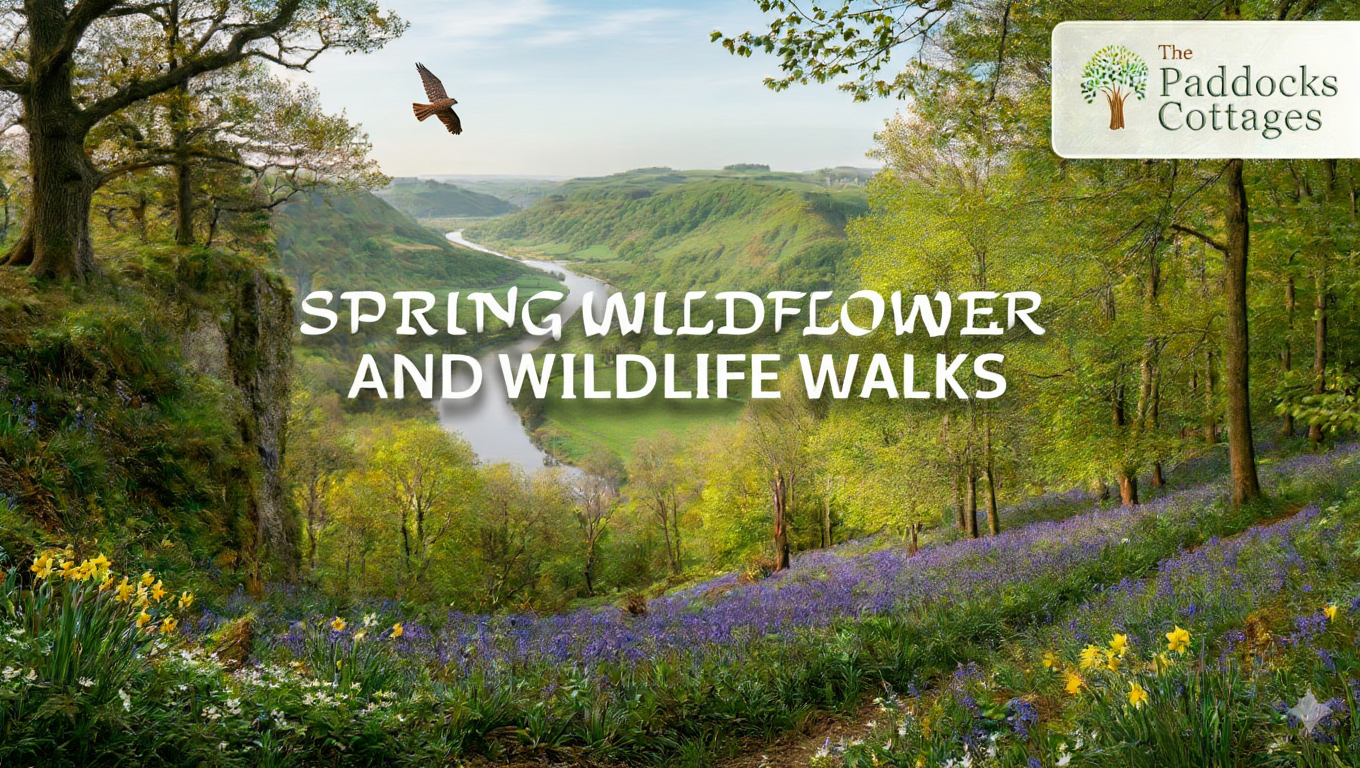
If you want to explore the Wye Valley National Landscape (formerly AONB), spring is the perfect time to do it. During this time of year, the region goes through a natural yet dramatic awakening and offers unique flora and fauna you may be lucky to encounter.
The shifting carpets of colour – wood anemones, primroses, violets, wild daffodils, woods covered in bluebells, and the scent of wild garlic – are waiting for you near Dymock, Fownhope, or woodlands like Lea and Paget's Wood. If you want to spot returning Goshawks, Peregrine Falcons, and Ospreys during their spring migration, Symonds Yat Rock is one of the most iconic viewpoints for these rare sightings.
This spring, with so much to explore, you can use this blog as a guide to some of the best places to visit for wildlife walks near Symonds Yat.
Spring is the best time of year to walk in the Wye Valley. Why? These ancient woodlands are famous for their shifting blankets of colour, with early spring starting with primroses and snowdrops, followed by daffodils in March.
The forests soften into green, pub gardens reopen, the pungent scent of wild garlic fills the air, and the woodland floor is carpeted with bluebells, turning trails violet-blue. Around Symonds Yat and in the Forest of Dean, April and May are the prime bluebell season.
As new leaves begin to bud, the thinner canopy allows clearer views down the valley floor from Symonds Yat Rock. At this time, walkers can also spot a few baby wild animals, including baby deer, lambs, and wild boar piglets.
This is also an excellent time for a group getaway, as the weather is warm enough to explore comfortably. Temperatures are usually mild, ranging between 8°C and 15°C, which is ideal for moderate climbs. If you love riverside walks, you’ll enjoy those near Ross-on-Wye, where the paths are suitable for all age groups and perfect for a relaxed walk in the spring sunshine.
The area is also famous for historic attractions like Raglan Castle and Tintern Abbey, which you can enjoy at a comfortable pace, as the area has fewer tourists around this time of the year compared to July or August.
With so much to explore, many people choose to book holiday homes in the Wye Valley to immerse themselves in the experience fully. These homes and cottages often offer serene settings and proximity to scenic, tranquil trails such as the following:
This trail, known as the Mailscot Wood Trail, encompasses Symonds Yat Rock, Mailscot Wood, and Chepstow Wood and offers a mix of dramatic limestone cliffs, riverside paths, and ancient woodland carpeted in bluebells, ramsons, and wood anemones. In April, you can spot Peregrine Falcons nesting on the Coldwell Rocks, as well as kingfishers, otters, and sand martins along the River Wye, and roe or fallow deer in quieter parts of Mailscot Wood.
This 5–7 mile loop connects Tintern Abbey with the Old Station at Tintern and offers a blend of natural beauty. During April and May, you may see white “water gardens” formed by water crowfoot, hear a chorus of robins and blackbirds, and, if you are lucky enough, spot goshawks and peregrine falcons in the limestone cliffs. Along the route, you can visit the old railway station, the Devil’s Pulpit viewpoint, and the Wireworks Bridge.
This free-to-access trail, which takes approximately 2 to 3 hours to complete, lets you explore Iron Age earthworks, ancient limestone caves, and rich wildlife, including horseshoe bats, hibernating herald moths, and cave spiders. The surrounding woods feature yellow bird’s nest, fingered sedge, and the usual bluebells and wild garlic decorating the woodland floor during spring.
You can access this path from the River Wye side or via a steep descent from Symonds Yat Rock. The trail offers a steep spring ascent through woodland blooming with wood anemones, bluebells, and ramsons. You can easily spot fallow deer, brimstone or orange-tip butterflies, and birds like flycatchers, nuthatches, and warblers. Keep your eyes open near Symonds Yat Rock for peregrine falcons, as this is their prime breeding area.
This 3.8-mile circular walk takes you through ancient woodland, riverside trails, and Iron Age hillforts. At Symonds Yat Rock viewpoint, you’ll see panoramic views of the River Wye winding through the valley. As you descend to the river, you’ll cross the scenic Biblins Suspension Bridge. The area also includes steep cliffs overlooking the river.
This 1.2-mile circular trail passes through Iron Age ramparts and ancient woodland, offering scenic views alongside vibrant wildflowers and wildlife. The forest floor and riverbanks are rich with seasonal blooms, and in quieter areas, you may spot fallow deer.
This roughly 5.5-mile loop offers breathtaking views of Tintern Abbey and the river below. The mature woodlands are a hotspot for birdlife, especially in areas like Nagshead. Watch the open ridges, which are ideal for spotting raptors.
The Wye Valley AONB woodlands are famous for their variety of wildflowers during spring:
To make the most of these walks, many visitors book holiday cottages in Symonds Yat so they can stay just minutes away from these beautiful woodland trails.
In spring, the Wye Valley National Landscape is teeming with life:
If you are planning an immersive escape, our holiday homes in Symonds Yat are an ideal base for exploring the region’s rich wildlife.
The five holiday homes of Paddocks Cottages sit on the borders of three counties – Herefordshire, Gloucestershire, and Monmouthshire – on the edge of the Forest of Dean.
It’s a beautiful place to stay and ideal for guests who enjoy walking, cycling, canoeing, wildlife watching, or simply relaxing in nature.
Guests appreciate the convenient access to Monmouth, Hereford, Ross-on-Wye, and the Forest of Dean, as well as the well-equipped, spacious, and dog-friendly cottages and the helpfulness of the proprietors.
You can book Paddocks Cottages online any time of year.
These trails are popular and generally safe. However, some sections can be muddy, poorly marked, or overgrown, so it’s best to come prepared with maps, GPS, and sturdy footwear.
Many Wye Valley walks are suitable for a range of fitness levels. For example, the “12 Easy Walks” include short (0.75 to 3 miles), flat routes ideal for casual walkers, older visitors, and families.
During spring, it’s important to keep visits low-impact. Avoid picking flowers or disturbing wildlife, stick to marked paths, and report invasive species if you spot any.
Dress in layers (a base layer, fleece, and waterproof jacket) and wear comfortable, waterproof boots. Pack a 15–30 litre backpack with essentials such as a map, first-aid kit, snacks, water, and sunscreen.

